


It has been just over a year since I last wrote about what’s in my wallet, and what a year it has been.
If Q1 of 2025 was the year I rebuilt my wallet around the Magnus Burgundy and the HSBC Premier, Q2 of 2026 is the year I have been forced to redefine what each card in my wallet actually does. The Magnus and Atlas lost three of their best transfer partners overnight. The Amex Platinum Travel was devalued in February.
The cards that worked 18 months ago are not the same cards today. Even the ones I have kept in active rotation are doing different jobs.
So this edition is less about new additions and more about role redefinition. This piece is not a deep review of every card, but a brief overview of why each card is in my wallet today and how I am using it.
This list does not necessarily represent the best credit cards available in India. It represents the cards that work for me, given my spend patterns, my travel goals, and the points currencies I am building. Your wallet should look different.
1️⃣ Axis Magnus Burgundy Credit Card (Continuation)
Annual Fee: ₹30,000 + GST
Annual Fee Waiver: Upon spending ₹30,00,000.
Annual Fee Waived for Me: ✅
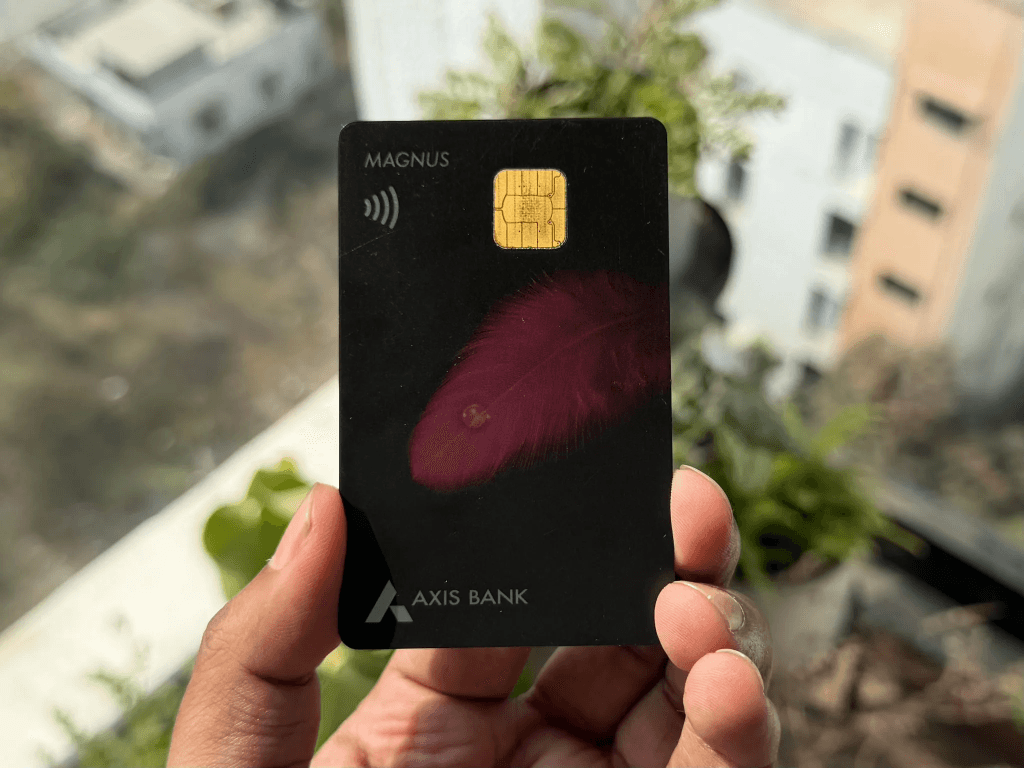
The Magnus Burgundy was my primary card going into 2025, and it remains my primary card going into Q2 of 2026 – but the reasoning has changed.
A year ago, the math was simple. Spend above ₹1.5L/month, earn at the 35 ER per ₹200 tier, and transfer to Accor at 5:4 for a clean, predictable INR 2 per point value. It was basically an Accor card for high spenders, with no redemption gymnastics required. It was the closest thing Indian cardholders had to a no-brainer earn engine.
That predictability is gone. In April 2026, Axis Bank removed Accor ALL, Marriott Bonvoy, and Qatar Airways Privilege Club from the Magnus and Atlas transfer partner list with no advance notice. British Airways and Finnair were added in their place at a worse 5:2 ratio. I have written the full breakdown of the changes here, but the short version: the destination matters more than the earn rate now.
So why does this card stay as my primary?
Because the 35 ER per ₹200 tier on spend above ₹1.5L/month is still unmatched on any Indian credit card. Even after the partner cull, transferring at 5:4 to KrisFlyer, Aeroplan, or Flying Blue gives you the best earn rate to those programmes from any Indian card in the market. ITC at 5:4 with a flat ₹1 per point value is the new predictable hotel fallback when I do not need airline miles.
The card has been forced to evolve from a “spend and transfer to Accor” card into a “spend and choose a partner programme based on the redemption you are planning”. More work, more thought required – but the underlying earn rate carries it.
My use case for Q2 2026: Bulk of monthly spending continues to go on this card. The flexibility of holding points in Edge Rewards is more valuable than ever, given how quickly the partner list can shift.
2️⃣ HSBC Premier Credit Card (Continuation)
Annual Fee: ₹20,000 + GST
Annual Fee Waiver: HSBC Premier Clients with qualified TRB
Annual Fee Waived for Me: ✅
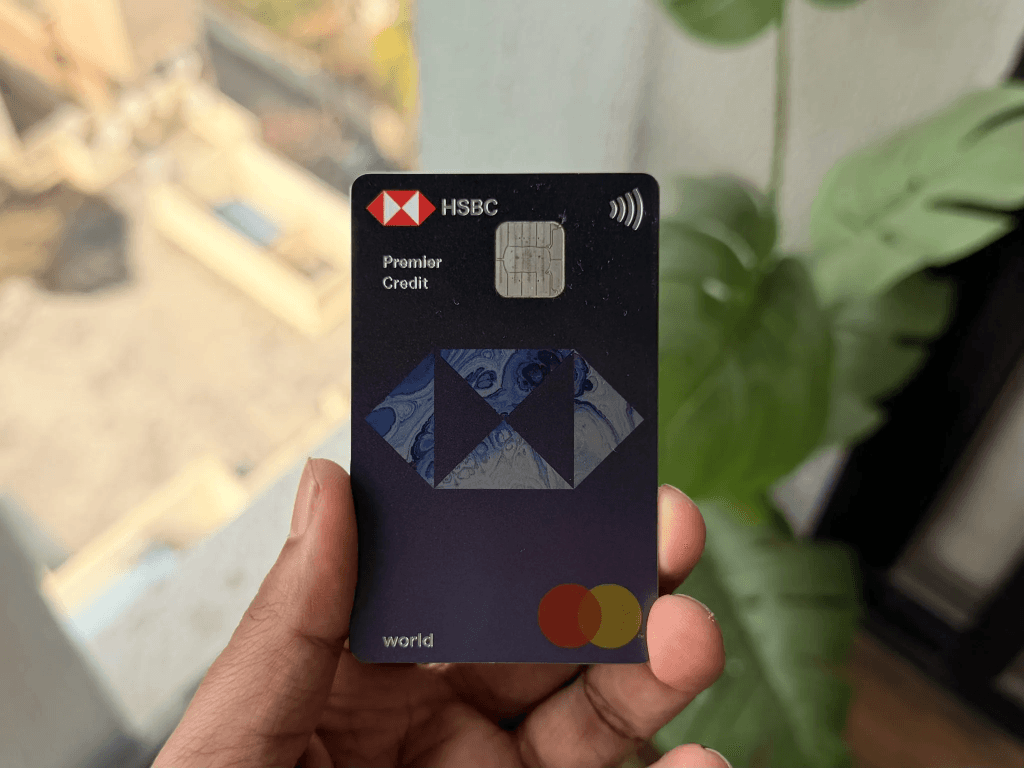
The HSBC Premier earned the “Catch-all King” label in my Q1 2025 wallet review. Eighteen months later, that framing has aged remarkably well – and the case for this card is stronger now than it was when it first entered my wallet.
The reason is straightforward: while every other card in the Indian premium space has been hit with some form of devaluation over the last year, HSBC Premier has not. The structure is largely the same as it was on day one – 3 reward points per ₹100 across all categories with some caps on categories that are otherwise entirely excluded on most other cards, and 1:1 transfers to all 20+ partners including Accor
That stability has quietly turned this card into the best transfer card in my wallet for a few specific use cases.
My use case for Q2 2026: This is my catch-all card for any spend that does not fit naturally into the Magnus, Diners, Biz Black, or Atlas buckets – everyday spends, online purchases, anything that would otherwise earn nothing on a category-restricted card.
3️⃣ HDFC Diners Club Black Metal (Continuation)
Annual Fee: ₹10,000 + GST
Annual Fee Waiver: Spend-based waiver on spending ₹8L.
Annual Fee Waived for Me: ✅
The Diners Club Black Metal stays in the wallet for Q2 2026, but its role has narrowed considerably. In Q1 2025, this was a versatile second card – rent payments, SmartBuy flight and hotel bookings, gift voucher purchases, the works. In Q2 2026, I am being more deliberate about what spending goes on it.
The reason is the slow erosion of the SmartBuy ecosystem. Through 2025 and into 2026, HDFC has tightened the screws on what you can actually do with points earned on this card. Convenience fees on Amazon Pay and Amazon Shopping vouchers (3.5% + GST), monthly caps slashed across several popular voucher categories, the 70% redemption cap on flight and hotel bookings. The card I held a year ago was meaningfully more flexible than the card I hold today.
My use case for Q2 2026: The card now has two specific roles. First, gift voucher purchases via the HDFC Gyftr portal – Amazon Pay, Amazon Shopping, and other vouchers where the math still works after fees. Second, revenue flight and hotel bookings via SmartBuy, which still offers 5X on flights and 10X on hotels and remains useful when a paid booking lines up with a domestic trip. The quarterly ₹4L milestone for 10,000 RP is a nice bonus when it triggers organically, but I am no longer chasing it.
What this card is not for anymore: rent payments. The Diners Black Metal is now a categorical card for specific use cases, not a daily driver.
4️⃣ HDFC Diners Biz Black Metal (Continuation)
Annual Fee: ₹10,000 + GST
Annual Fee Waiver: Spend-based waiver on spending ₹7.5L
Annual Fee Waived for Me: ❌
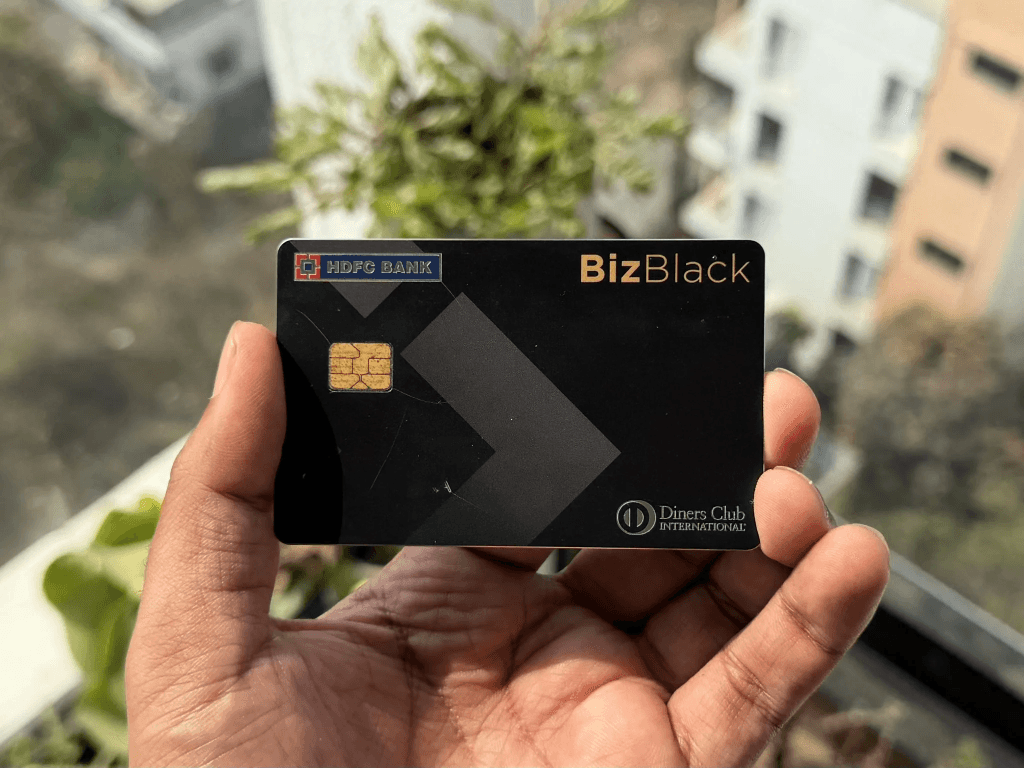
This card’s role has not changed since Q1 2025 – and that is exactly why it remains in my wallet.
The Biz Black Metal is the card I use for spend categories that most other cards have stopped rewarding: government payments, GST, advance tax, and bill payments via PayZapp and SmartPay. The 5X accelerated reward earning on these categories is still one of the few clean answers for the kind of spends that earn zero on a Magnus, an HSBC Premier, or an Atlas.
If anything, the case for this card has gotten stronger over the past 18 months. Banks across the board have continued to strip points on government and utility spends. The Biz Black Metal has held its ground while alternatives have disappeared.
My use case for Q2 2026: Pure categorical card for business and tax-related spends. Quarterly advance tax, GST payments, utility bills routed through PayZapp/SmartPay, and any government payments.
The flight or Taj voucher milestone bonus at every ₹5L of spend is a useful side benefit, but it is not the reason this card is in the wallet. The card earns its keep on the categorical play alone.
❌ Cards That Moved Out of the Wallet
American Express Platinum Travel (Cancelled in spirit, kept as LTF)
Annual Fee: LTF for Me
In February 2026, American Express restructured the milestone bonuses on the Platinum Travel card and rendered it materially worse. The new structure is 7,500 MR points at ₹1.9L spend (down from 15,000 MR), 10,000 MR at ₹4L (down from 25,000 MR + Taj voucher), and 22,500 MR + ₹10,000 Taj voucher at the new ₹7L threshold. In effect, what you used to get at ₹4L now requires ₹7L. I covered the full impact analysis here, comparing the post-devaluation Plat Travel against six other cards at the ₹1.9L, ₹4L, and ₹7L tiers.
The verdict was clear: the Plat Travel no longer earns its place in the active wallet. Even at the new ₹7L milestone, the card is being out-earned by Magnus Burgundy, HSBC Premier, and HDFC DCB at the same spend level.
I am not cancelling the card outright because I hold it as Lifetime Free, so there is no fee dragging on me to keep it. The points are sitting there, the welcome benefit was used, and there is no real cost to leaving it dormant. But it is not getting any active spend from me.
🧦 Sock Drawer
Axis Atlas (Sock Drawer)
Annual Fee: ₹5,000 + GST
The Atlas is a great card on paper – and that is exactly why it ends up in the sock drawer rather than the active wallet.
On earning potential, the Atlas is genuinely strong. 2 EM per ₹100 base, accelerated 5 EM per ₹100 on travel, and a 1 EM : 2 partner point ratio for most Group A and Group B partners. On the right spend, it can put up earn rates that few other Indian cards can match. The post-April 2026 devaluation cut the Avios ratio and removed Accor, but the rest of the transfer architecture is still intact.
The problem is what happens after you have earned those miles. The Atlas annual transfer caps are restrictive particularly for Group A partners. 30,000 EDGE Miles per customer ID to Group A partners, and 1,20,000 EDGE Miles per customer ID to Group B partners, every calendar year. To put the Group A cap in context – 30,000 EM at the 1:2 ratio gives you 60,000 partner miles. That is one short-haul/medium-haul Business Class one-way redemption at best. It is not enough to fuel meaningful redemptions for someone who travels with any regularity.
There is also the HSBC Hopper platform on the Premier credit card, which has changed how I think about accelerated earnings on travel bookings.
My use case for Q2 2026: Occasional spend on revenue flight and hotel bookings – the 5 EM per ₹100 on travel category is still good when I happen to use it. But that’s incidental. I am not actively routing spend to this card, and I am not chasing the milestones. With the HSBC Premier handling a lot of what Atlas used to handle (transfers, no caps to worry about for a single redemption, 1:1 ratios), the Atlas is a soft draw card for me now.
A great card by the numbers. Just not a great card for the way I actually use my points.
American Express MRCC + American Express Gold Charge
Annual Fee: Both cards are LTF for me.
Both cards remain in the sock drawer category for Q2 2026, with one important update: I have now automated the monthly milestone voucher purchases on both cards. The setup runs in the background – the milestone vouchers credit each month with minimal effort on my part – and the points/vouchers from these cards continue to add up without taking up real estate in the active wallet.
This is the cleanest version of “sock drawer that pays for itself” – cards that I am not actively spending on, but that produce milestone benefits passively. If you have these cards, the milestone automation is worth setting up. The earn rates do not justify making either card a primary, but the milestones over a year add up to meaningful value.
HDFC Marriott Bonvoy Credit Card
Annual Fee: ₹3000 + GST
I am a Marriott Bonvoy Titanium member, which requires 75 elite nights every calendar year to retain. The 10 Elite Night Credits this card delivers annually helps close that gap meaningfully. The card is essentially a status hold – it lets me maintain Titanium with fewer actual stays than I would otherwise need, which directly preserves benefits like suite upgrades, lounge access, and the rest of the Titanium package on every Marriott stay through the year.
The 15,000 point free night voucher you receive on annual fee payment is a nice cherry on top, but I do not attribute a meaningful value to it. The 10 ENCs are the entire reason this card is in my wallet.
My use case for Q2 2026: A single transaction to keep the card active each year. That is genuinely it. I am not chasing milestone bonuses, I am not routing spend here, and I am not earning Bonvoy points on the card itself. The annual fee buys me 10 elite nights, and that is all I need from this card.
Closing
That’s my wallet for Q2 2026. Four active cards. Four sock drawer cards. A combined annual fee outlay of approximately ₹18,000 + GST across the lot.
I want to highlight the four active cards point specifically, because it is something I have said repeatedly across this publication and it bears saying again: you do not need a wall of cards to earn meaningful points and pull off meaningful redemptions.
Four cards, used deliberately for what each one does best, will outperform a wallet of fifteen cards used randomly almost every single time. The wallet I have today is leaner than the one I held 18 months ago. Each card in my active wallet has one or two specific jobs.
If you find yourself holding eight active cards and struggling to remember which one to use for what, that is a signal that the wallet needs pruning.The work is in deciding what each card is for – and being honest with yourself about cards that no longer earn their place.
I hope you found this article informative and helpful. If you have any questions, leave them in the comments below.

5 Responses
You don’t have any card for UPI payment?
No. Most of my UPI transactions are small and it is not worth optimizing such small transactions.
Out of all of these, what do you use for foreign currency payments (non airline/ hotel), esp when you are travelling or planning an international trip?
Premier.
Any card that still works for rent?