
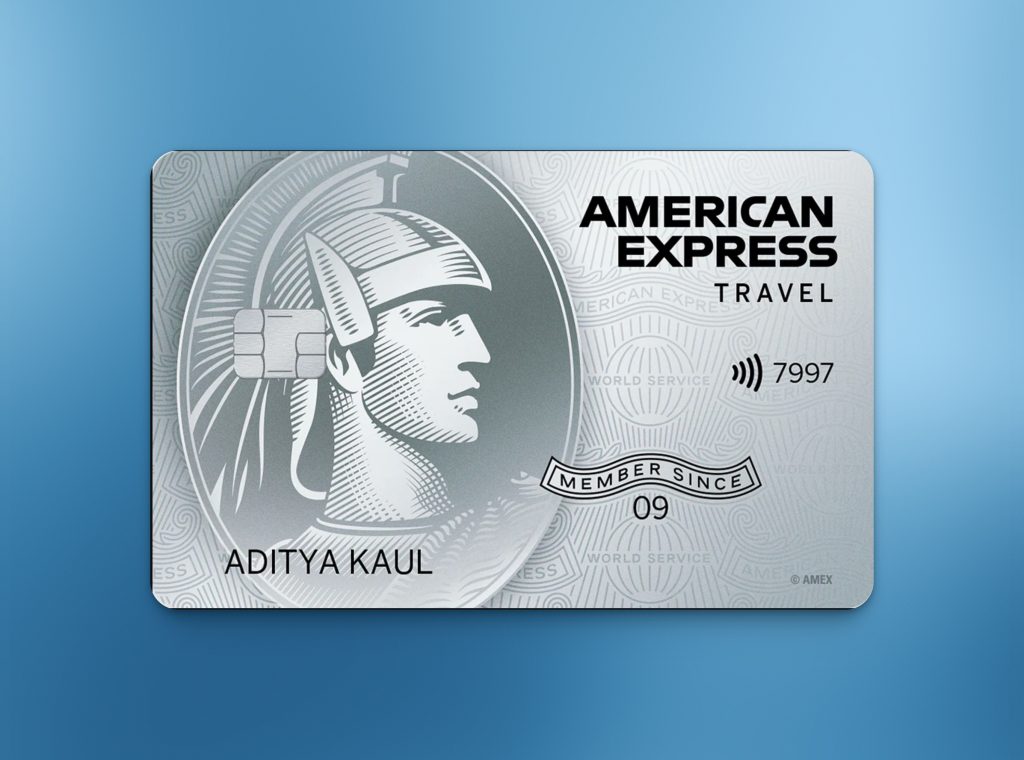

Effective March 9, 2026, American Express revised the milestone rewards structure on the Amex Platinum Travel Credit Card.
The short version: you now need to spend significantly more to unlock the same value you used to get. This post breaks down exactly what changed, runs the numbers against six competing cards, and tells you where I’m personally putting my spends going forward.
What Changed: The New Milestone Structure
Here is the old structure vs the new one:
| Spend Threshold | Old Rewards | New Rewards (from Mar 9) |
| ₹1.9L | 15,000 MR points | 7,500 MR points |
| ₹4L | 25,000 MR + ₹10,000 Taj Voucher | 10,000 MR only (no Taj voucher) |
| ₹7L | N/A | 22,500 MR + ₹10,000 Taj Voucher |
The Taj voucher, which used to unlock at ₹4L, now requires ₹7L of spend. MR points out that the ₹1.9L milestone has been halved. The annual fee remains ₹5,000 + GST.
One positive: rewards are now auto-credited. No more calling customer care.
The Excluded Categories Argument: Why It Does Not Change Much
The most common defence of the Amex Platinum Travel card is that it accepts excluded category spends (insurance premiums, tax payments, rent) towards milestone calculations. Most other premium cards either block these categories entirely or don’t count them toward milestone thresholds.
This is a legitimate point. If you have large, unavoidable fixed spends in these categories that earn zero rewards on any card, routing them through Amex Platinum Travel to unlock milestones is a rational strategy. You’re essentially converting dead spend into milestone rewards.
However, the logic only holds under a specific condition: those excluded category spends need to be genuinely surplus: spends that would earn nothing on any alternative card. The moment a competing card earns even base rewards on insurance or rent, the comparison shifts.
More importantly, the devaluation makes the milestone targets significantly harder to justify:
- Pre-devaluation: ₹4L of excluded-category spend unlocked 25,000 MR + ₹10,000 Taj voucher. That was a strong proposition.
- Post-devaluation: ₹4L gets you only 10,000 MR. You now need ₹7L of excluded spends to recover the Taj voucher. That is a much higher bar.
- Unless you have ₹7L of genuinely dead spends that earn nothing elsewhere, the Amex Platinum Travel is no longer the best home for excluded category spends either.
This is ultimately a personal spend audit question. Run through your fixed annual outflows (rent, insurance, tax) and check what each card in your wallet actually earns on those categories. If the total is below ₹7L and other cards earn on at least some of it, the excluded categories argument doesn’t hold up.
How to Read This Comparison
Before the tables, a few important assumptions:
- All comparisons are at three spend tiers: ₹1.9L, ₹4L, and ₹7L, matching the Amex Platinum Travel milestone thresholds.
- Points are shown in their native currency (MR, Edge Miles, Edge Rewards, Rewards Points) and converted to airline miles where applicable, using known transfer ratios.
- Axis Magnus Burgundy spend splits: ₹1.9L as a single month; ₹4L as two months of ₹2L each; ₹7L as three months of ₹2.5L + ₹2.5L + ₹2L. This affects whether the 35 RP/₹200 tier kicks in.
- HDFC DCB quarterly milestone (10,000 RP per ₹4L/quarter): counted once across the ₹4L and ₹7L tiers (one quarter hits ₹4L, second quarter hits ₹3L and does not qualify).
- All comparisons show base earning rates only. Accelerated category bonuses (such as higher earn rates on flights, hotels, or other specific spend categories) are excluded to keep the comparison clean. The only exception is the Axis Magnus Burgundy tiered structure (12 RP/₹200 below ₹1.5L/month, 35 RP/₹200 above), which is a base structural feature of the card rather than a category-specific bonus.
Points & Miles Earned Across All Cards
This table shows raw earn (base points plus applicable milestones) at each spend tier. For cards with airline transfer options, the equivalent airline miles are shown in brackets.
| Points / Miles Earned by Spend Tier | ||||
| Card | ₹1.9L Spend | ₹4L Spend | ₹7L Spend | |
| Amex Platinum Travel | 7,500 MR | 17,500 MR | 40,000 MR + ₹10K Taj Voucher | |
| Axis Atlas | 3,800 EM (7,600 Miles) | 10,500 EM (21,000 Miles) | 16,500 EM (33,000 Miles) | |
| Axis Magnus Burgundy | 16,000 RP (12,800 Miles) | 35,500 RP (28,400 Miles) | 70,750 RP (56,600 Miles) | |
| HDFC DCB (1:1 partners) | 6,333 Miles | 23,333 Miles | 33,333 Miles | |
| HDFC DCB (2:1 partners) | 3,166 Miles | 11,666 Miles | 16,666 Miles | |
| HDFC Infinia (1:1 partners) | 6,333 Miles | 13,333 Miles | 23,333 Miles | |
| HDFC Infinia (2:1 partners) | 3,166 Miles | 6,666 Miles | 11,666 Miles | |
| HSBC TravelOne | 3,800 Miles | 8,000 pts Miles | 14,000 Miles | |
| HSBC Premier | 5,700 Miles | 12,000 Miles | 21,000 Miles | |
Key observations:
- Axis Magnus Burgundy is a significantly stronger earner at ₹1.9L in a single month, the 35 RP/₹200 rate kicks in above ₹1.5L generating 16,000 RP (12,800 air miles). At ₹7L across three months it produces 70,750 RP (56,600 air miles), making it the strongest card in this comparison at that tier. The key is ensuring monthly spend crosses the ₹1.5L threshold.
- Axis Atlas is also a standout at every tier in airline miles, particularly at ₹4L where the ₹3L milestone bonus kicks in, generating 21,000 airline miles vs Amex’s 17,500 MR (which converts to 8,750 airline miles at 2:1).
- HDFC DCB with the quarterly milestone is competitive at ₹4L (23,333 RP) but drops relative to Atlas at ₹7L when Atlas adds a second milestone.
- HSBC TravelOne and HSBC Premier are identical in earn rate and produce fewer miles than Axis Atlas at every tier, but 1:1 transfers to airline partners offer flexibility.
Hotel Points Lens (Marriott Bonvoy and Accor)
A common way to value Amex MR points is through Marriott Bonvoy, since it is the only Amex transfer partner that operates at 1:1. All other Amex partners transfer at 2:1, making Marriott the most preferred path for transfers from this card.
If we are comparing Amex MR through its best hotel transfer partner, it is only fair to compare the other cards on the same basis: their best available hotel transfer partner, which is Accor. This makes the comparison valid on a like-for-like basis across best available hotel programmes.
Transfer ratios used:
Amex MR to Marriott 1:1 (valued at Rs.0.45/pt).
Axis Atlas to Accor 1 EM = 2 Accor pts.
Axis Magnus to Accor 5 RP = 4 Accor pts.
HDFC DCB/Infinia to Accor 2 RP = 1 Accor pt.
HSBC TravelOne/Premier to Accor 1:1.
Accor points valued at Rs.2/pt.
| Hotel Points Lens: Best Transfer Partner per Card | ||||
| Card | Hotel Program | Rs.1.9L | Rs.4L | Rs.7L |
| Amex Platinum Travel | Marriott Bonvoy (1:1) | 7,500 pts (Rs.3,375) | 17,500 pts (Rs.7,875) | 40,000 pts (Rs.18,000) + Rs.10K Taj |
| Axis Atlas | Accor (1 EM = 2 pts) | 7,600 pts (Rs.15,200) | 21,000 pts (Rs.42,000) | 33,000 pts (Rs.66,000) |
| Axis Magnus Burgundy | Accor (5 RP = 4 pts) | 12,800 pts (Rs.25,600) | 28,400 pts (Rs.56,800) | 56,600 pts (Rs.1,13,200) |
| HDFC DCB | Accor (2 RP = 1 pt) | 3,166 pts (Rs.6,332) | 11,666 pts (Rs.23,332) | 16,666 pts (Rs.33,332) |
| HDFC Infinia | Accor (2 RP = 1 pt) | 3,166 pts (Rs.6,332) | 6,666 pts (Rs.13,332) | 11,666 pts (Rs.23,332) |
| HSBC TravelOne | Accor (1:1) | 3,800 pts (Rs.7,600) | 8,000 pts (Rs.16,000) | 14,000 pts (Rs.28,000) |
| HSBC Premier | Accor (1:1) | 5,700 pts (Rs.11,400) | 12,000 pts (Rs.24,000) | 21,000 pts (Rs.42,000) |
The Bottom Line
The Amex Platinum Travel devaluation is not catastrophic on its own, but it removes the card’s best feature (the ₹4L sweet spot) and replaces it with a ₹7L threshold that most cardholders will not hit. Compared to what the six alternatives generate at the same spend levels, the case for routing active spends through this card is weak.
For most cardholders:
- If you have sufficient spend on otherwise excluded categories like tax, insurance, or rent, and those spends earn nothing on your other cards, the Platinum Travel still has a case. Keep it and use it specifically for that dead spend.
- If you do not have meaningful excluded category spends and already hold cards like the Axis Magnus Burgundy, Atlas or HDFC DCB, it is worth revisiting your strategy. The Platinum Travel may no longer justify its place in your wallet.
What I’m Doing With My Card
My Amex Platinum Travel is a Lifetime Free (LTF) card, so there’s no annual fee consideration. But that does not change the math. The earn rate post-devaluation simply does not justify routing spends through it when better alternatives exist.
I’m keeping the card open (LTF, no reason to close), but I will not be spending on it. My spends are going to cards that earn meaningfully more at the same spend levels, as the comparison above shows. Plus I have the HDFC BizBlack which takes care of a lot of the excluded categories such as taxes – I have excluded this card from the comparison above since HDFC has become fairly strict on the issuance of this card and is only issued to self-employed/business owners.

10 Responses
Thanks for this Jay
You’re welcome.
Thanks Jay. How did you get the Amex Plat Travel LTF?
Under a very old offer, not relevant anymore.
Since you have consistently mentioned rent here Jay. Do you know any way to route rent through PTC. I was earlier doing it via wallet load on MobiKwik. But the same has been stopped now.
Mobikwik is the only one I know of that people were using. If that has stopped, that further dilutes the reason to hold on to the Plat Travel.
Thanks Jay, Just wanted to check what wud be the best card for Govt. Payments. I have an upcoming spend on house registration. Have plat travel but exhausted the 4l spends on it), Infinia, Atlas. Any other card that gives points on Govt. Transactions apart from Biz Black (not getting it). Indusind Avios or any other that you can recommend.
HSBC Premier I think – upto a certain threshold.
Jay, to keep the comparison fair, you need to add the base points for PTC in the comparison. I can see only the bonus points being added. If the assumptions are only excluded spends for the said calculation then the other cards would have to be 0 since they don’t reward on excluded categories.
The Platinum Travel doesn’t earn base rewards on the excluded categories either. Only milestone.